Why Change Management Is the Secret Ingredient to Successful ERP Investments (And Why Most Companies Miss It)
Here's a sobering reality check: your company just spent millions on a state-of-the-art ERP system, but six months post-implementation, employees are still using spreadsheets, productivity hasn't improved, and leadership is questioning where all that money went. Sound familiar? You're not alone.
The problem isn't with the technology: it's with how companies approach ERP implementations. While organizations pour resources into selecting the right software and configuring systems, they consistently underestimate the most critical factor for success: change management.
The Hidden Problem: ERP Investments That Don't Deliver
The statistics around ERP implementation failures are staggering. Research shows that nearly 60% of IT investments are significantly underutilized due to poor integration and ineffective change management. This means that more than half of an organization's technology budget could be wasted simply because people aren't using the tools correctly: or at all.
The financial implications extend far beyond wasted software licenses. Disengaged employees, often the result of poorly managed technological transitions, cost US businesses between $450 to $500 billion annually. When you factor in lost productivity, increased errors, and the need for expensive system modifications, the true cost of ignoring change management becomes astronomical.

Consider this scenario: a manufacturing company implements a comprehensive ERP system to streamline operations, improve inventory management, and enhance reporting capabilities. The technical implementation goes smoothly, but employees resist the new processes. They find workarounds to avoid using the system, continue relying on familiar but outdated methods, and ultimately render the expensive ERP investment largely ineffective.
This pattern repeats across industries because companies treat ERP implementations as purely technical projects when they are fundamentally organizational transformation initiatives.
Why Change Management Makes the Difference
Driving User Adoption and Engagement
The most sophisticated ERP system becomes worthless if employees don't embrace it. Change management addresses this challenge by involving employees throughout the implementation process, addressing concerns proactively, and providing comprehensive training that empowers users to leverage the system effectively.
Effective change management creates a structured approach to communication, training, and support that leads to higher adoption rates. When employees understand not just how to use the new system, but why the change benefits them personally and professionally, they become advocates rather than obstacles.
Organizations with strong change management strategies report significantly higher user engagement levels. Employees who feel supported during transitions develop a sense of ownership that translates into long-term system success and continuous improvement.
Maximizing Return on Investment
Change management directly impacts the bottom line through several key mechanisms. Well-trained teams can leverage ERP systems to automate routine tasks, streamline workflows, and improve overall business efficiency. This optimization only happens when employees are properly prepared and supported through the transition.
The role of change management extends beyond initial implementation. It includes ongoing support that helps reduce errors in the new system, ensuring accurate and consistent data management. This continuity is crucial for maintaining the system's value and achieving the projected ROI.
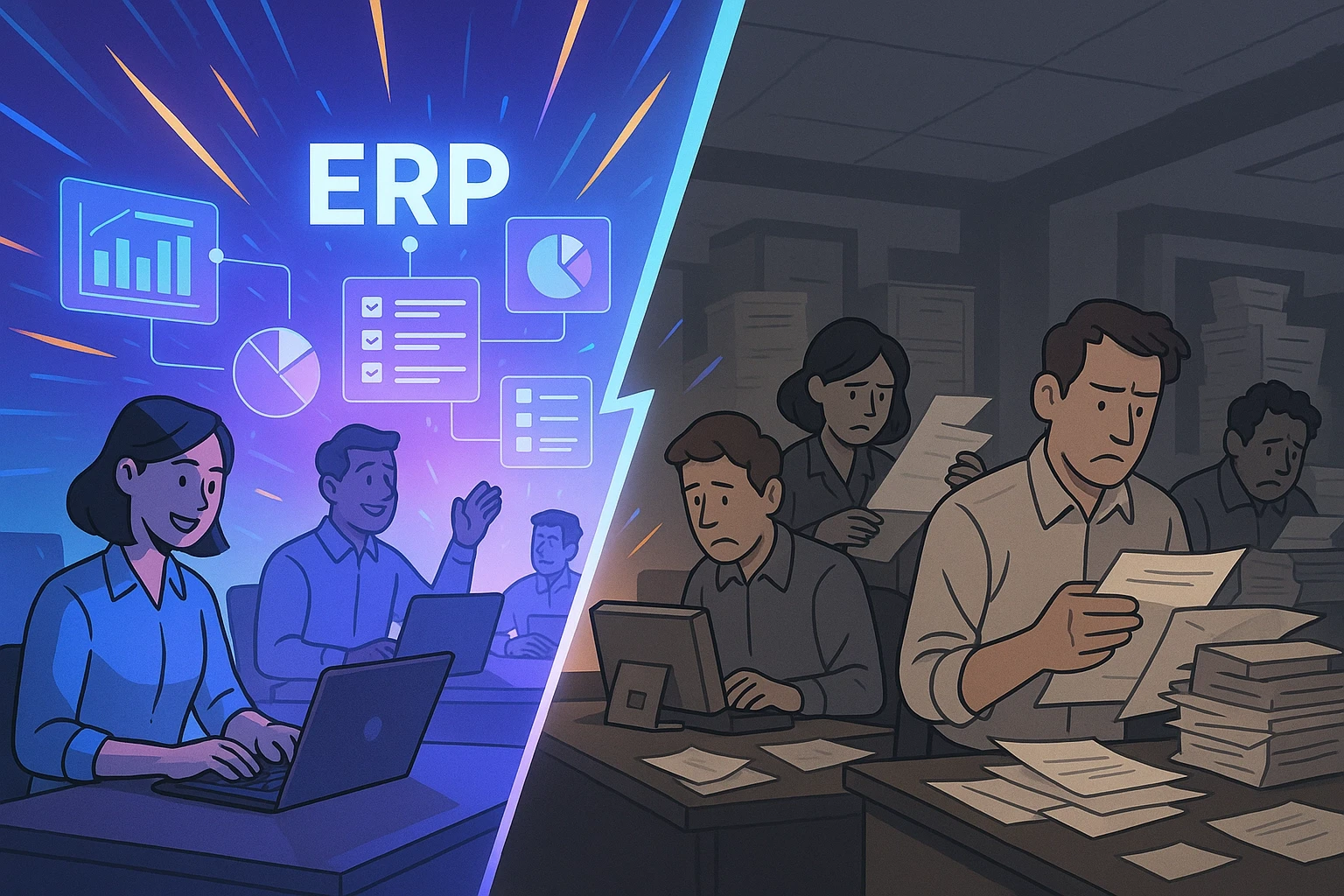
Organizations that invest in comprehensive change management strategies typically see their ERP systems deliver benefits more quickly and more completely than those that focus solely on technical implementation.
Mitigating Implementation Risks
Change management helps identify potential resistance and risks early in the implementation process, allowing organizations to address these challenges proactively. By developing strategies to minimize disruption and resistance, companies can ensure smoother transitions with less impact on daily operations.
This proactive approach includes managing stakeholder expectations through effective communication, providing timely and accurate information that addresses uncertainties and builds trust among employees. When people understand what's happening and why, they're more likely to support the change rather than resist it.
The Common Mistakes Companies Make
Focusing on Technology Over People
Most organizations approach ERP implementations with a predominantly technical mindset. They concentrate on system configuration, data migration, and technical integration while treating change management as an afterthought or a minor project component.
This technical bias leads companies to underestimate the complexity of organizational transformation required for successful ERP adoption. They assume that if the system works technically, employees will naturally adapt and embrace the new processes.
Underestimating Cultural Impact
Successful ERP implementations require cultural alignment. The system must align with organizational culture while simultaneously helping shape that culture to be more adaptable and receptive to new technologies and processes.
Many companies fail to recognize that ERP systems don't just change how work gets done: they fundamentally alter organizational dynamics, decision-making processes, and employee roles. Without addressing these cultural implications, even technically perfect implementations can fail.

Treating Change Management as a One-Time Event
Change management isn't a project phase that ends at go-live. It's an ongoing process that establishes frameworks for continuous feedback and improvement. Most companies treat it as a checkbox to tick during implementation rather than an ongoing organizational capability.
This short-sighted approach misses opportunities to ensure that ERP systems continue meeting evolving business needs and that employees remain engaged and productive long after the initial implementation.
The Strategic Advantage of Getting It Right
Organizations that invest in structured change management strategies don't just protect their technology investments: they unlock higher engagement and create sustainable competitive advantages. Research indicates that highly engaged teams are 21% more productive and generate 21% higher profitability than disengaged teams.
Change management creates a foundation for performance improvement, ensuring employees understand and leverage new systems to enhance their productivity. It also establishes communication channels that keep stakeholders informed about progress, benefits, and impacts, reducing uncertainty and building organizational resilience.
Companies that recognize change management as essential to ERP success position themselves to fully capitalize on their technology investments while building organizational capabilities that extend far beyond any single system implementation.
Building an Effective Change Management Strategy
Start with Leadership Commitment
Successful change management begins with visible, committed leadership. Leaders must champion the change, communicate its importance consistently, and demonstrate their own commitment to the new processes and systems.
Develop a Communication Plan
Create a comprehensive communication strategy that addresses different stakeholder groups, timelines, and concerns. Regular, transparent communication helps build trust and reduces uncertainty throughout the implementation process.
Invest in Training and Support
Comprehensive training programs should address not just how to use the new system, but why the change is happening and how it benefits both the organization and individual employees. Ongoing support ensures that learning continues beyond initial training sessions.

Measure and Adjust
Establish metrics to track adoption rates, user satisfaction, and business outcomes. Use this data to adjust your change management approach and address emerging challenges quickly.
The Path Forward
ERP investments represent significant commitments of time, money, and resources. Organizations that approach these implementations with equal focus on technology and change management dramatically improve their chances of success.
The companies that thrive in today's competitive landscape are those that recognize ERP implementations as comprehensive organizational transformations requiring strategic change management. They understand that the secret ingredient to ERP success isn't better technology: it's better preparation of the people who will use that technology.
At Hypernix, we've seen firsthand how proper change management transforms ERP implementations from expensive technical exercises into powerful drivers of business success. Our approach ensures that your technology investments deliver their promised returns by preparing your organization for sustainable, long-term success.
Ready to maximize your ERP investment through comprehensive change management? Contact us today to learn how our proven methodologies can help your organization achieve its digital transformation goals while ensuring your team embraces and leverages new systems effectively.
About the author

Dominic Gopal is the CEO of Hypernix Sdn Bhd, a leading digital transformation consultancy in Malaysia. With over 34 years of experience in ERP, RPA, and AI-driven solutions, he has led 50+ successful implementations, helping enterprises achieve smarter, scalable operations.