Hero BG
Hero BG

Manufacturing Execution (Quantum, DigiHua)

A powerful manufacturing execution extension that connects production lines, quality control, and ERP systems for complete visibility and efficiency.

Manufacturing Execution (Quantum, DigiHua)

A powerful manufacturing execution extension that connects production lines, quality control, and ERP systems for complete visibility and efficiency.

Manufacturing Execution (Quantum, DigiHua)

A powerful manufacturing execution extension that connects production lines, quality control, and ERP systems for complete visibility and efficiency.

What is Manufacturing Execution (MES)?

What is Manufacturing Execution (MES)?

An integrated solution to digitize and monitor production operations.

Quantum and DigiHua Manufacturing Execution Systems (MES) help businesses gain real-time control of their production processes. These extensions track every step of manufacturing, from raw material input to finished goods output, ensuring higher productivity, better quality, and compliance with industry standards. By integrating directly with ERP platforms, MES bridges the gap between shop floor operations and business management, giving companies the visibility needed to optimize resources and improve delivery times.

Key Features

Key Features

How it works

Step-by-step execution from plan to post-production.

1. Plan & Schedule

Load demand from ERP, generate feasible schedules by line, shift, and constraint.

2. Issue Work Orders

3. Execute & Capture

4. Inspect & Control

5. Close & Post

6. Analyze & Improve
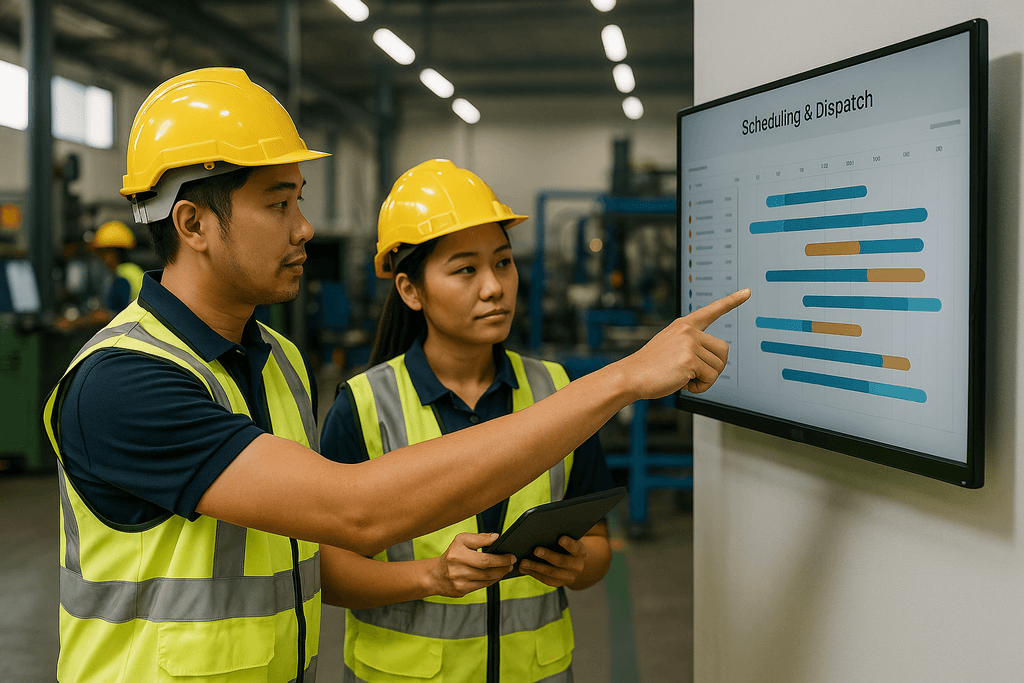
1. Plan & Schedule

Load demand from ERP, generate feasible schedules by line, shift, and constraint.

2. Issue Work Orders

3. Execute & Capture

4. Inspect & Control

5. Close & Post

6. Analyze & Improve

1. Plan & Schedule

Load demand from ERP, generate feasible schedules by line, shift, and constraint.

2. Issue Work Orders

3. Execute & Capture

4. Inspect & Control

5. Close & Post

6. Analyze & Improve
Business Benefits

Operational gains you can measure.

Operational gains you can measure.

Higher Throughput

Shorter cycle times and fewer bottlenecks with live scheduling and dispatch.

Better Quality

Accurate Costs

On-Time Delivery

Audit-Ready Traceability

Higher Throughput

Shorter cycle times and fewer bottlenecks with live scheduling and dispatch.

Better Quality

Accurate Costs

On-Time Delivery

Audit-Ready Traceability

Business Benefits

Operational gains you can measure.

Higher Throughput

Shorter cycle times and fewer bottlenecks with live scheduling and dispatch.

Better Quality

Accurate Costs

On-Time Delivery

Audit-Ready Traceability

Works with Your ERP System

Seamless integration with global and regional ERP platforms.

Works with Your ERP System

Seamless integration with global and regional ERP platforms.

Works with Your ERP System

Seamless integration with global and regional ERP platforms.

FAQ's

What’s the difference between MES and ERP?

ERP manages planning, finance, and inventory; MES manages execution on the shop floor, capturing real-time production data and feeding ERP.

What’s the difference between MES and ERP?

ERP manages planning, finance, and inventory; MES manages execution on the shop floor, capturing real-time production data and feeding ERP.

What’s the difference between MES and ERP?

ERP manages planning, finance, and inventory; MES manages execution on the shop floor, capturing real-time production data and feeding ERP.

Can MES start small and scale?

Yes. Begin with a pilot line or plant, then extend to more lines, shifts, and sites as your team matures.

Can MES start small and scale?

Yes. Begin with a pilot line or plant, then extend to more lines, shifts, and sites as your team matures.

Can MES start small and scale?

Yes. Begin with a pilot line or plant, then extend to more lines, shifts, and sites as your team matures.

Do we need machine integrations to use MES?

Not necessarily. You can start with operator inputs and add PLC/IoT signals later for auto-capture.

Do we need machine integrations to use MES?

Not necessarily. You can start with operator inputs and add PLC/IoT signals later for auto-capture.

Do we need machine integrations to use MES?

Not necessarily. You can start with operator inputs and add PLC/IoT signals later for auto-capture.

How long does implementation take?

Typical rollouts range from 6–12 weeks for a focused scope, depending on integrations, lines, and QC depth.

How long does implementation take?

Typical rollouts range from 6–12 weeks for a focused scope, depending on integrations, lines, and QC depth.

How long does implementation take?

Typical rollouts range from 6–12 weeks for a focused scope, depending on integrations, lines, and QC depth.

Contact us now and get a free consultation

Contact us now and get a free consultation

Contact us now and get a free consultation